If you are leading growth for a business-to-business company Down Under, you already know that the old playbook of cold calling from purchased lists and blasting generic email newsletters is dead. Modern buyers are more educated, highly skeptical, and prefer to conduct extensive research before ever speaking to a sales rep.
To thrive today, you need more than just a scattergun approach; you need a predictable, scalable machine. Consider this article a practical, system-focused guide explaining what a high-functioning B2B lead generation system looks like in the Australian market — covering inbound vs. outbound strategy, paid acquisition channels (Meta, Google, LinkedIn), content and SEO lead generation, lead nurture sequences, CRM and lead scoring, and how to measure performance. Written from the perspective of practitioners who have built these systems across multiple industries, this guide positions Gild Grow’s Revenue Creation and Revenue Conversion methodology at the heart of sustainable business growth.
Whether you are looking to refine your current setup or build a net-new framework, here is exactly how to engineer a high-functioning B2B lead generation system Australia relies on to turn target accounts into closed-won deals.

Before diving into tactics, we must shift how we view a successful B2B lead generation strategy Australia. Most companies mistakenly treat marketing and sales as entirely separate entities. At Gild Grow, we believe in a unified framework broken down into two distinct, yet deeply interconnected phases:
If you have brilliant Revenue Creation but poor Revenue Conversion, you are just subsidizing your competitors by educating buyers who eventually buy elsewhere. If you have great conversion but poor creation, your elite sales team will starve from an empty pipeline. Understanding how to build a B2B revenue engine means mastering both.
The debate between inbound vs outbound B2B marketing is a distraction. The most robust Australian B2B lead generation strategy leverages both in a synchronized loop.
Inbound lead generation is about drawing prospects to your business organically by positioning yourself as a trusted advisor. It relies on creating valuable resources that answer your ideal customer profile’s (ICP) specific pain points.
Conversely, outbound lead generation is about proactively taking your message directly to highly targeted accounts who fit your ICP but might not be actively looking for a solution yet.
By running both simultaneously, you create a holistic scalable B2B lead acquisition framework. Outbound initiates conversations and drives immediate pipeline, while inbound builds a moat of long-term brand equity and sustainable lead flow.

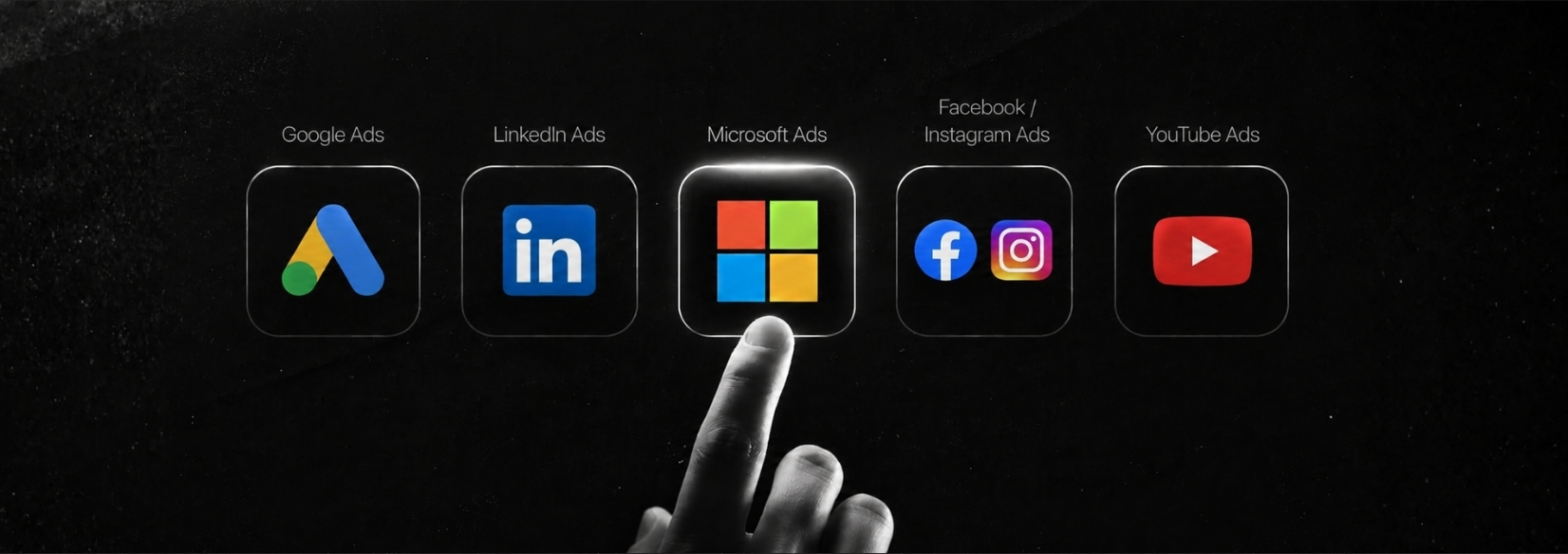
When executing paid B2B advertising Australia, you cannot rely on a single platform. A mature multi-channel paid acquisition strategy distributes your budget across platforms based on user intent and platform strengths.
Australia has one of the highest LinkedIn adoption rates globally, making it the undisputed king of B2B demand generation. However, because it is an expensive platform, you must use it strategically.
While LinkedIn captures passive intent, Google Ads captures active intent. When someone types “enterprise CRM lead management software” into Google, they have a problem they want to solve right now.
Many B2B marketers dismiss Meta, assuming “business buyers aren’t on Facebook.” But B2B buyers are human beings who doom-scroll Instagram just like everyone else.
You cannot power a revenue engine without fuel, and in B2B, content is the fuel. Content-led lead generation systems focus on publishing high-quality, actionable insights rather than generic fluff.
To generate B2B sales leads Australia through content, your strategy must encompass:
A strong SEO and content strategy acts as a compounding asset. Unlike paid ads that stop generating leads the moment you turn off the budget, evergreen content continues generating lead generation for business Australia years after it is published.
Generating a lead is only the first step of Revenue Creation. If you instantly hand every eBook downloader over to the sales team, your reps will get frustrated, and the prospects will feel annoyed.
You need automated lead nurture sequences for B2B.
Effective lead nurture Australia strategies acknowledge that the B2B buying cycle can take anywhere from three to eighteen months. During this time, your goal is to stay top-of-mind, continuously add value, and build trust.
Best Practices for Lead Nurturing:
By keeping the conversation going, you are dramatically improving B2B lead quality before a sales rep ever picks up the phone.

To bridge the gap between Revenue Creation and Revenue Conversion, you must implement rigorous CRM lead management. A disorganized CRM is the graveyard of B2B revenue.
This is where B2B CRM lead scoring best practices come into play. Lead scoring is a methodology used to rank prospects against a scale that represents the perceived value each lead represents to the organization.
A high-functioning B2B lead generation system Australia typically categorizes scoring into two buckets:
Once a lead hits a specific threshold (e.g., 100 points), the CRM automatically upgrades them from a Marketing Qualified Lead (MQL) to a Sales Qualified Lead (SQL), triggering a task for the sales team to initiate contact.
This objective, data-driven approach removes emotion and ensures perfect B2B sales and marketing alignment. Marketing knows exactly what constitutes a “good lead,” and Sales trusts that the leads being handed over are genuinely ready to have a buying conversation.

You cannot scale what you cannot measure. A mature approach to revenue operations australia requires moving away from vanity metrics (likes, impressions, total website traffic) and focusing squarely on pipeline metrics.
If you want a b2b lead generation system that actually converts, you must relentlessly focus on B2B marketing funnel optimization.
Crucial Metrics for Measuring B2B Marketing ROI:
By closely monitoring these metrics, practitioners can identify exactly where the friction lies in the Revenue Creation to Revenue Conversion journey. If your win rate is high but pipeline velocity is low, you might need to invest more in top-of-funnel b2b marketing strategy australia to generate more awareness. If pipeline is huge but win rates are abysmal, your sales enablement, closing techniques, or lead qualification processes need immediate attention.
Building a B2B revenue machine is not about hacking the latest social media algorithm or buying massive lists of unverified contacts. It is an architectural endeavor.
As we have outlined in this guide, a high-functioning B2B lead generation system Australia relies on a deliberate, interconnected structure. It demands a balanced inbound vs outbound B2B marketing strategy. It requires a smart, multi-channel paid approach across LinkedIn, Google, and Meta. It thrives on valuable content and is sustained by automated, empathetic lead nurturing. And above all, it is governed by strict CRM hygiene, logical lead scoring, and rigorous performance measurement.
By viewing your business growth through Gild Grow’s dual lenses of Revenue Creation and Revenue Conversion, you eliminate silos, align your teams, and build a truly scalable B2B lead acquisition framework.
Stop relying on random acts of marketing. Start building a system that predictably, reliably, and efficiently turns the Australian market’s demand into your company’s bottom-line revenue.
If you want help designing, building, or fixing your end-to-end lead generation and conversion system, Gild Grow can support you across both Revenue Creation and Revenue Conversion — from channel strategy and content to nurture, CRM design, lead scoring, and performance reporting.
Reach out Gild Grow to book a practical system review and leave with a prioritized action plan to improve pipeline quality, velocity, and conversion.