Starting a new enterprise in Australia is an exciting journey, but before you start designing logos or signing leases, you need to build a solid legal foundation. Deciding how to structure a business is one of the most critical early choices you will make. Your decision impacts everything from how much tax you pay to your personal exposure to legal risks.
Consider this article a complete guide for Australian business owners comparing company, discretionary trust, sole trader, and partnership structures. Whether you are launching a side hustle, growing a family enterprise, or seeking venture capital, understanding Australian business structures is the key to protecting your assets and maximizing your profits.

When evaluating a business structure Australia offers four primary options: sole trader, partnership, company, and trust. Finding the best business structure for your specific needs requires a careful balancing act between setup costs, ongoing administration, tax efficiency, and asset protection.
Let’s dive deeply into each of these four entities.
Operating as a sole trader is the simplest and cheapest way to start a business in Australia. You and your business are legally the same entity. You control all the decisions, keep all the profits, but also shoulder all the risks.
When weighing sole trader versus company tax rates Australia, the difference is stark. As a sole trader, your business income is added to your personal income, meaning you are taxed at individual marginal tax rates (which can reach up to 45% plus the Medicare levy). A company, on the other hand, is taxed at a flat corporate rate (currently 25% for base rate entities).
Because you are the business, you have zero legal separation. If the business is sued or falls into debt, your personal assets—like your family home and car—are entirely on the line.
Many entrepreneurs start here to test the waters. However, as profits increase and risks multiply, you will likely need to know how to change from sole trader to company. This transition involves registering a new company, transferring assets, and updating your contracts, which your accountant can help facilitate smoothly.
A partnership is formed when two or more people (or entities) go into business together with a view to making a profit. It is relatively inexpensive to set up and allows you to pool resources, skills, and capital.

Understanding the advantages and disadvantages of Australian partnership agreements is vital. A major advantage of a well-drafted agreement is that it clearly outlines profit-sharing, dispute resolution, and what happens if one partner wants to leave. The biggest disadvantage? If you don’t have an agreement in place, you are bound by default state legislation, which might not align with your business goals.
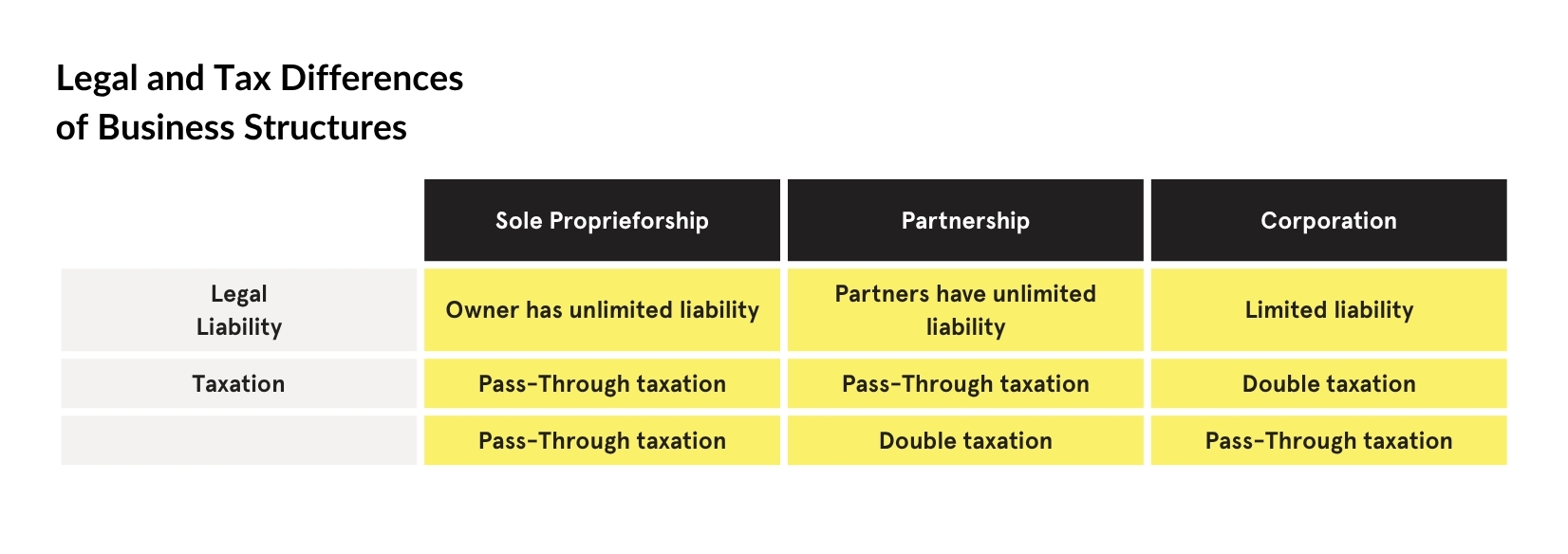
When weighing a partnership vs company for small business, liability is the deciding factor. In a standard partnership, partners have “joint and several liability.” This means if your partner signs a disastrous contract and the business goes bankrupt, creditors can come after your personal assets to settle the debt. A company structure prevents this by acting as a shield between business debts and personal wealth.
When people think of corporate structures, they usually picture a company. A company is a separate legal entity from its owners (shareholders) and those who run it (directors). While there are different types of companies (such as public companies listed on the ASX), the most common for SMEs is the Proprietary Limited (Pty Ltd) company.
The setup costs for a pty ltd company are higher than for a sole trader, usually ranging from $500 to $1,500 depending on legal and accounting fees. Furthermore, you must be prepared for the annual compliance obligations for Australian private companies. This includes paying annual review fees to ASIC, maintaining a company register, and filing distinct company tax returns.
One of the main reasons business owners choose this route is the limited liability protection for Australian business owners. Because the company is a separate entity, protecting personal assets from business debt becomes much easier—provided directors haven’t signed personal guarantees or traded while insolvent.
When comparing a sole trader vs company Australia, the company offers distinct advantages for scalability. However, be wary of taking money out of the company. Business owners must navigate complex Division 7A tax considerations for companies. If a company lends money to a shareholder without a formal loan agreement, the ATO may treat it as an unfranked dividend, resulting in a hefty personal tax bill.
A trust is an obligation, rather than a separate legal entity. A trustee (which can be a person or a company) holds assets or runs a business for the benefit of others (the beneficiaries). The most common type used by SMEs is the discretionary trust (often called a family trust).
The standout feature of this structure is the tax flexibility of Australian discretionary trusts. Because the trustee decides who gets the profits, they can distribute income to beneficiaries in lower tax brackets. These income splitting benefits for family small businesses can save tens of thousands of dollars in tax annually compared to a sole trader structure.
The debate of company vs trust Australia is common among established entrepreneurs. In a discretionary trust vs company scenario, the trust itself doesn’t pay tax, provided it distributes all its income to beneficiaries. A company pays a flat tax rate but leaves profits trapped inside the corporate structure unless distributed as dividends.
For maximum security, accountants often recommend a combination: using a corporate trustee (a Pty Ltd company) to run the discretionary trust. When evaluating a proprietary limited vs discretionary trust for asset protection, having a corporate trustee gives you the limited liability of a company alongside the tax flexibility of a trust.
When choosing the right business structure for startups or restructuring an existing enterprise, you need to assess your specific circumstances against three main pillars:
The legal liability differences between Australian business structures are profound. If your business operates in high-risk industries (like construction, medical services, or physical retail), avoiding sole trader and partnership structures is wise. Utilizing a company or a trust with a corporate trustee provides the necessary barrier to safeguard your personal home and savings.
Understanding business structure tax implications Australia can drastically alter your bottom line.
If you ever plan to bring on external investors, issue shares to employees, or sell the business, a company structure is universally understood and preferred by investors. A trust can be overly complex for external investors, and partnerships or sole traders cannot issue shares at all.

There is no single “correct” answer when navigating Australian business structures. The ideal setup depends entirely on your industry, family situation, growth plans, and risk profile.
While a sole trader setup is excellent for a low-risk freelance gig, scaling up will eventually require the limited liability of a company or the tax agility of a discretionary trust.
Because the rules governing asset protection, Division 7A, and capital gains tax concessions are highly complex, it is strongly recommended that you consult with a qualified Australian accountant or commercial lawyer. They will look at your unique circumstances and help you lay a solid, legal foundation that protects your hard work today and supports your business empire tomorrow.
Choosing the wrong business structure doesn’t just create paperwork — it can expose your personal assets, cost you tens of thousands in avoidable tax, and complicate your ability to raise capital or exit when the time comes. The right decision today becomes the foundation everything else is built on.
At The Gild Group, we work with Australian business owners at every stage — from first-time founders setting up their initial structure to established operators restructuring ahead of a major growth phase or exit. Our team takes the time to understand your specific circumstances, your family situation, your risk profile, and your long-term goals before making any recommendation.
Your business structure is too important to get wrong. Book a consultation with The Gild Group today and build the right foundation from the start.