Building a successful brand requires more than just an eye-catching logo or a memorable slogan—it requires legal ownership. Every day, Australian business owners pour their time and resources into building their reputation, only to discover later that someone else has claimed their brand name. To prevent this, securing your intellectual property should be at the top of your to-do list.
Welcome to this practical step-by-step guide to trademark registration in Australia via IP Australia. Whether you are launching a fresh startup or finally locking down the rights to a legacy company, navigating the trademark application process can seem daunting. However, with the right information, it is highly manageable.
In this comprehensive guide, we will break down exactly how to register a trademark in Australia, covering everything from early research and costs to legal compliance and final registration.
Before diving into the steps, we need to clear up a very common misconception regarding trade mark vs business name registration. Many entrepreneurs register their business name, company name, or domain name and assume they automatically own the exclusive rights to that name. Unfortunately, this is a myth.
ASIC (the Australian Securities and Investments Commission) requires you to register your trading name, but this only identifies who is running the business. It does not grant you proprietary rights. If you genuinely want to trademark a business name Australia, you must actively apply for it through IP Australia.
Understanding the benefits of registered vs unregistered marks is vital.

You should never submit an IP Australia trademark application blindly. The first and most critical action is to execute a step by step trademark search process.
IP Australia has a free database called Australian Trade Mark Search. You need to conduct a thorough trademark search australia to ensure nobody else has already registered a mark that is identical or deceptively similar to yours.
Actionable Tips for Searching:
By doing this, you significantly reduce the risk of your application being rejected later.
Trademarks do not protect your brand across every possible industry; they protect your brand within the specific industries you operate in. Australia uses the Nice Classification for goods and services, an international system that divides goods and services into 45 distinct classes (Classes 1-34 for goods, Classes 35-45 for services).
Selecting the correct trade mark classes is a make-or-break step. Once your application is submitted, you cannot add extra classes to it. If you expand your business later, you will need to file a brand new application.
Think carefully about what you sell now, and what you realistically plan to sell in the next few years.
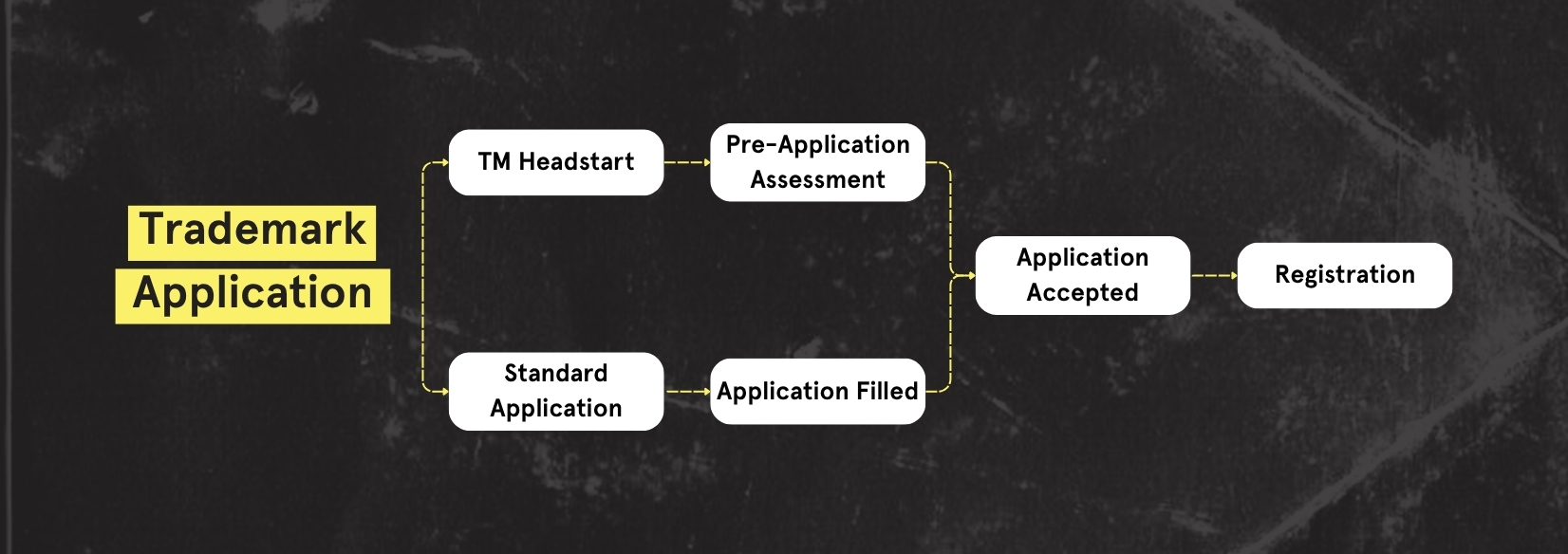
When figuring out how to register a trade mark in Australia, you will be presented with a few different filing options. You need to decide between a standard application and a specialized preliminary assessment.
For most small to medium businesses, filing a TM Headstart request is the smartest choice. TM Headstart is a two-part process. In Part 1, an examiner reviews your application before it is officially filed and made public. Within five working days, they will give you a confidential assessment of whether your mark is likely to be accepted. If there are issues, you can amend your application or abandon it without paying the full filing fee. If you get the green light, you pay the Part 2 fee, and it converts into a standard application.
You should also consider whether you need a standard application vs international registration. A standard application protects you only in Australia. If you plan to export goods or offer services overseas, you might want to look into the Madrid Protocol, a centralized system that allows you to apply for protection in multiple countries simultaneously using your base Australian application.
Budgeting is a core part of business planning, which leads to the frequently asked question: how much does a trademark cost in Australia?
The trademark cost Australia depends on the application pathway you choose and how many classes you file under. Fees are charged per class.
As a general guide (fees subject to change via IP Australia):
Pro Tip: Utilizing IP Australia’s pre-approved “picklist” of goods and services not only reduces your overall trademark cost Australia but also speeds up the examination process.
Now that you have your name, your classes, and your preferred pathway, it is time to officially apply.
The portal is designed to be user-friendly, making trademark registration australia accessible to everyday business owners, not just specialized intellectual property lawyers.
Once you hit submit, you enter the trade mark examination process timeline. Standard applications usually take around 3 to 4 months to be examined.
During this time, an examiner will review your application to ensure it meets all legal requirements, primarily checking for Australian Trade Marks Act 1995 compliance. They are looking for two main things:
If the examiner finds an issue, they will issue an Adverse Examination Report. Do not panic—this is common. Responding to an adverse examination report involves addressing the examiner’s concerns. You are generally given 15 months to resolve the issues. You might need to provide evidence that you have been using the mark for a long time, or you may need to limit your classes to avoid a conflict. If the issues are complex, consulting a trademark attorney at this stage is highly recommended.

If your application sails through the examination (or you successfully overcome an adverse report), IP Australia will issue a Notice of Acceptance.
However, your mark is not registered just yet. It must now undergo a mandatory two-month opposition period. Your trademark will be published in the Australian Official Journal of Trade Marks. This gives third parties the opportunity to oppose your registration if they believe it infringes on their existing rights.
If the two months pass with no opposition—congratulations! You simply pay the final registration fee (if applicable to your specific application type), and your mark is officially entered into the registry. You can now proudly display the ® symbol next to your brand.
Completing the application is a massive milestone, but trademark ownership is an ongoing responsibility.
A common question from new brand owners is: how long does trademark protection last? In Australia, a registered trademark lasts for 10 years from the date you originally filed your application (not the date it was officially registered). After 10 years, you can renew it indefinitely by paying a renewal fee. As long as you keep using the mark and paying your renewals, it can belong to you forever.
Your registration grants you robust legal protection against trademark infringement. However, IP Australia is an administrative body; they do not police the marketplace for you. It is your responsibility to monitor your industry.
If you spot a competitor using a confusingly similar name or logo, your registered trademark gives you the legal backing to send a cease and desist letter and, if necessary, take them to federal court to stop their unauthorized use and claim damages.
Securing your brand is one of the smartest investments you can make in your business’s future. Let’s recap the core steps of the process:
By following this practical guide, you can navigate the complexities of the system with confidence. Protect your hard work, secure your market position, and ensure that your brand identity remains uniquely yours. Start your journey toward successful trademark registration Australia today!
If you want expert guidance before you file, or support at any stage of the process, speak with our Gild Legal team. We work with Australian business owners and founders to protect their intellectual property the right way, the first time.
Book a consultation with us directly to get started.